
Safety Precautions
Due to the ongoing covid-19 pandemic, we are following all precautions to avoid spreading the virus. You are advised to wear a mask throughout the cleanup and maintain 2 feet of physical distance. Please wear good quality shoes to avoid any cuts from broken glass pieces.
Gloves
You will be provided with good quality gloves to avoid direct contact of hands with waste.
Cleanup bags
We use High Density Poly Ethylene bags (Rice bags) to collect the waste on beaches due to their durability
Every beach cleanup is a stark reminder of a reality we often choose to ignore—the waste scattered across our shores did not appear on its own. It is the result of everyday acts of civic irresponsibility, where convenience is prioritized over accountability and public spaces are treated as someone else's responsibility.
Plastic bottles, food wrappers, and other litter found along the coastline reveal the collective impact of careless behavior. What begins as a single act of littering eventually accumulates into a serious environmental challenge, threatening marine life, degrading natural habitats, and diminishing the beauty of our beaches.
Beach cleanups are therefore more than environmental activities; they are a call for change. They challenge citizens to recognize that protecting public spaces begins with individual responsibility and that a cleaner future depends not only on volunteers who clean up, but also on people who choose not to litter in the first place.
Activity Gallery


Activity Details
569th Beach Cleanup
The Beach Cleanup
A walk along a polluted beach reveals an uncomfortable truth about modern society. The litter scattered across the shoreline is not merely waste—it is evidence of neglect, indifference, and a failure to recognize our shared responsibility toward public spaces. Every discarded bottle, plastic bag, and food wrapper tells the story of a choice made without considering its consequences.
The growing accumulation of waste along our coasts highlights the impact of civic irresponsibility. While many people enjoy the beauty of beaches, far fewer acknowledge their role in preserving them. The result is an increasing burden on the environment, with marine ecosystems, wildlife, and coastal communities paying the price for careless human behavior.
Beach cleanup drives expose this reality in the most direct way possible. Volunteers spend hours removing waste that should never have been discarded in the first place. Their efforts demonstrate both the scale of the problem and the dedication required to address it. Yet they also raise an important question: how much cleaner would our beaches be if everyone took responsibility for their own waste?
At the same time, these cleanups offer hope. They show that while irresponsibility may create problems, responsible action can create solutions. Every volunteer who participates sends a powerful message that public spaces deserve care and respect. Their actions inspire others to rethink their habits and become more conscious of their impact on the environment.
Ultimately, the greatest lesson from a beach cleanup is that environmental degradation is not inevitable—it is the consequence of human choices. Likewise, cleaner beaches and healthier ecosystems are also the result of human choices. By replacing indifference with responsibility and apathy with action, citizens can transform not only the condition of their beaches but also the culture of civic engagement itself. The path to meaningful change begins when individuals understand that protecting the environment is not someone else's duty—it is everyone's responsibility.
Volunteers
-

Rongali Aravind
Recent Activities
_ql7z3151m.jpg)
Mega Blood Donation Camp
calendar_month 12-10-2026
lan Digi Blood
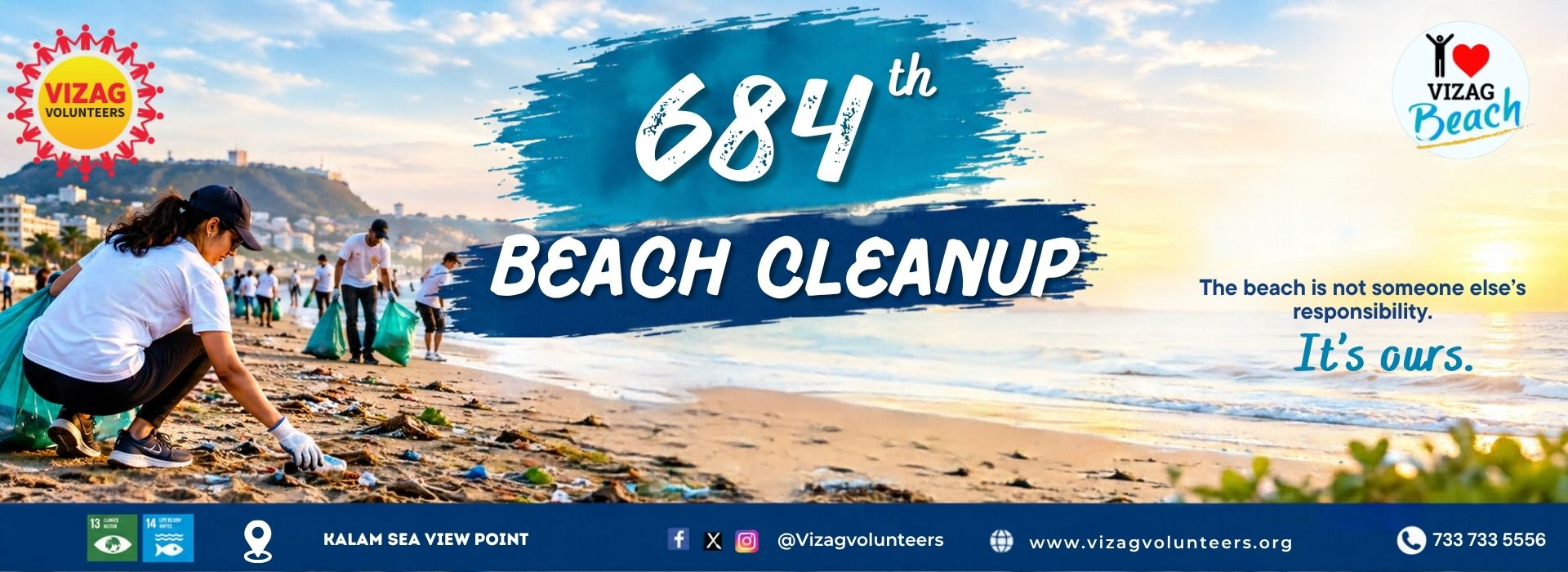
684 Beach clean up
calendar_month 11-10-2026
lan I Love Vizag Beach
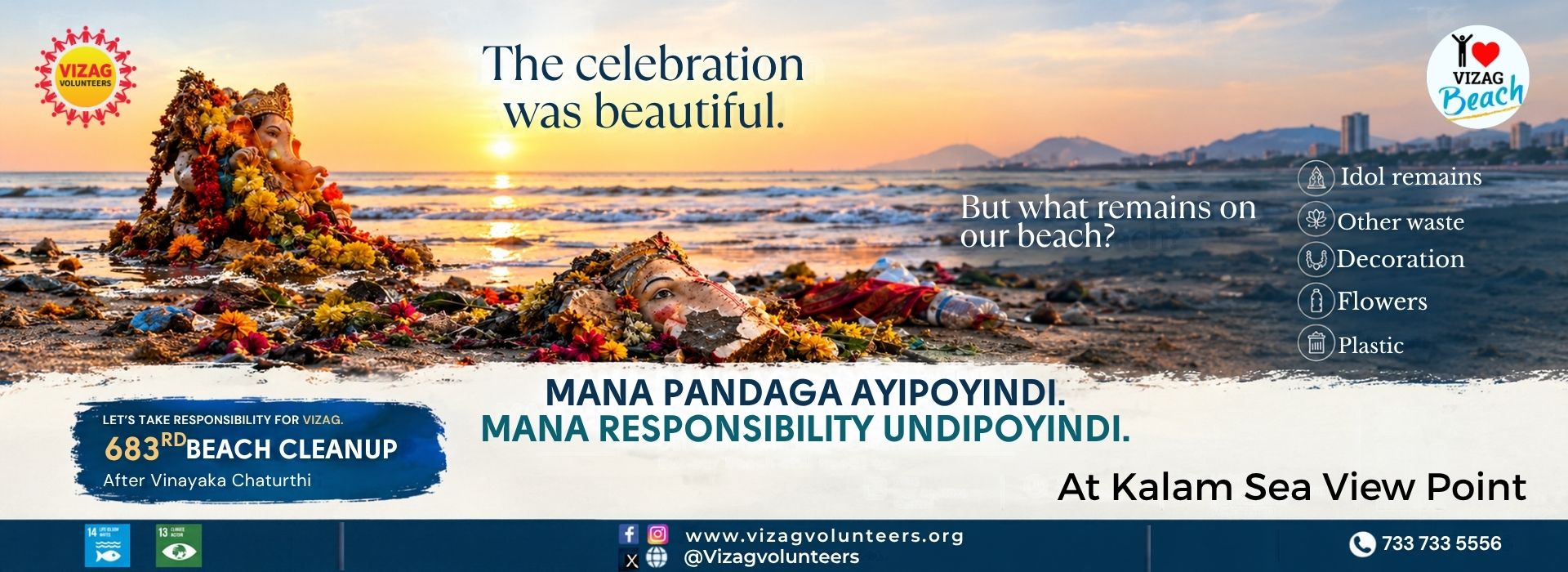
683 Beach cleanup
calendar_month 03-10-2026
lan I Love Vizag Beach
